This Thanksgiving, most of us will thank God for the turkey, the family, the house and the health. Those gifts are real, and we should name every one of them. But in a Thanksgiving message titled “We Complain About Things People Used To Dream Of,” Glenn Beck asked Americans to notice something else: the blessings so ordinary we barely think of them as blessings at all. Clean water. A light that comes on. Grocery shelves that are full. A country where millions of strangers take care of one another before dawn, and almost no one says thank you.
The miracles we treat as ordinary
Beck’s starting point is almost too simple. This morning you turned on a faucet and clean water came out. You did not boil it, strain it through a cloth or walk two miles to a well. Kings once could not count on that. Somewhere in your town a water operator is working the night shift, checking the chlorine and watching the pressure. You will never know his name, Beck said, and he is not thinking about you. But he is taking care of you.
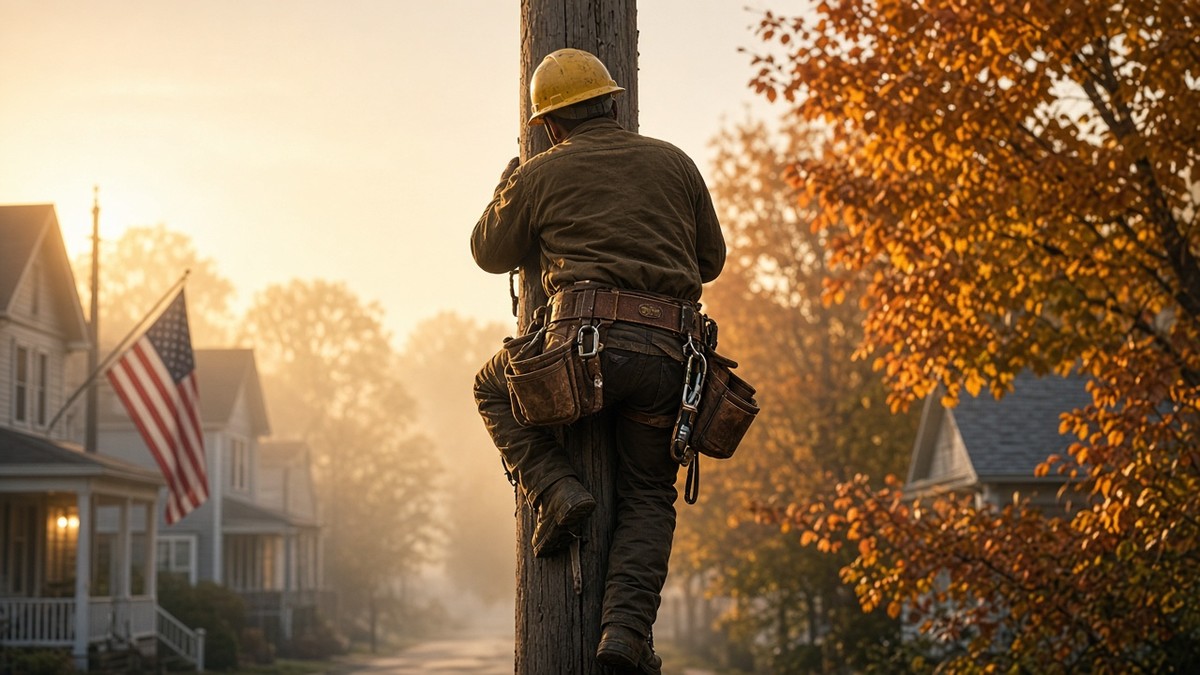
You flipped a switch and a light came on because a lineman climbed a pole in freezing rain last winter. You walked into a store and the shelves were full because a farmer got up before dawn, a trucker drove all night and a kid stocked those shelves at 4 in the morning. You can buy a banana in November in Idaho for pocket change. “No emperor in history could have done that in the dead of winter,” Beck said. “Never.”
A miracle of cooperation, not an accident
Modern America likes to call that “the economy,” as if it were a machine that runs itself. Beck is closer to the truth. “We have built a world where millions of strangers wake up every single day and they take care of each other without even knowing who the other person is,” he said. “And we call it the economy.” “It is closer to a miracle of cooperation.”
That miracle did not appear by accident. It grew in a free country, among people who work, invent, deliver and keep their word. When it works perfectly, we do not notice it. We notice it when it breaks. Gratitude is how a serious people keep from despising the system that feeds them and lights their homes.
The blessing of what did not happen
The blessing we miss most, Beck argued, is not what happened today. It is what did not happen. “Today, you didn’t get smallpox,” he said. “I can say that with confidence.”
For thousands of years, almost no family could say that. Children died of it. It killed pharaohs and kings. The World Health Organization estimates that smallpox killed some 300 million people in the 20th century alone. Then, village by village, it was hunted down until one last natural case remained.
His name was Ali Maow Maalin, a hospital cook in Merca, Somalia. In October 1977, according to the CDC, he rode in a vehicle with two smallpox patients. He later said he had skipped his own vaccination because he was afraid the needle would hurt. He caught the disease, survived, and became the last person on earth known to have contracted smallpox in the wild.
“We’re living inside of a victory we didn’t even fight and don’t even notice,” Beck said. “Somebody else fought it for us. Most of our blessings look like that.” The same is true of the bridge that did not collapse and the infection that would have killed a great-grandfather. We keep score by what went wrong. We do not keep a list of the crashes we were not in. That quieter list, Beck reminded his audience, is a thousand times longer, and every line of it is a gift.
Gratitude does not erase the hard things
Beck was honest about the objection. Some people are behind on the rent. A child will not talk to them. They do not want to hear about bananas. “That’s fair,” he said. “Your pain is real.” Then came the line worth writing down: “But gratitude does not erase the hard thing. It just won’t let the hard thing be the only thing.”
That is a conservative instinct as much as a spiritual one. Self-pity is a poor foundation for a free people. Perspective is not an insult to suffering. It is how a man stays upright under it. Before you go to sleep tonight, name three things that did not happen to you today. Then thank God. And if you can find them, thank the strangers who made the ordinary possible: the lineman, the nurse, the water worker, the cashier. As Beck noted, Americans thank soldiers for their service all the time, but almost never walk up to a water worker and say the same. We should. “The people who hold up your world are invisible on purpose. When they do their job perfectly, you don’t even notice them.”
Be the adult
Beck’s close is a charge. Gratitude is not only about noticing what you have been given. It is about becoming the kind of person someone else can count on. Tomorrow, somewhere, somebody is depending on you “to be that one thing in their life that doesn’t go wrong.”
“Don’t panic. Be the adult. Be prepared. Be kind. Be gracious,” he said. “Be calm. Be the leader you expect to have in others.” We can look at what is glitching. We should. But we ought to notice how much in this country still works, and how rare that has been in human history. The poorest man in America still lives among blessings that emperors could not buy. The least we can do on Thanksgiving is see them, thank God for them, and then go be the kind of neighbor, parent and citizen who holds someone else’s world up in return.
Happy Thanksgiving from all of us at The Daily Patriot.